How much can I earn chartering my recreational boat?

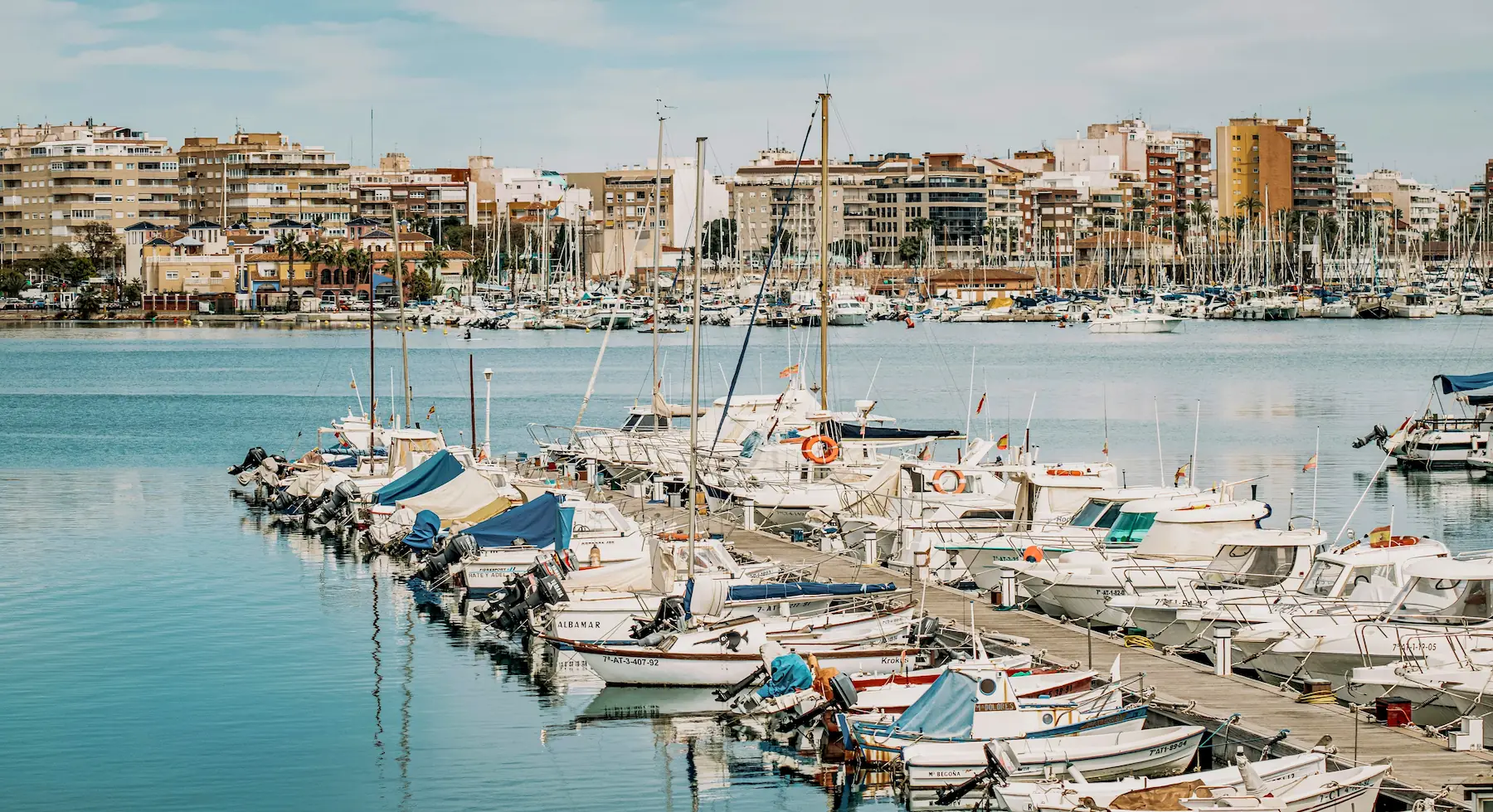
If you own a Lista Septima recreational boat, you have probably asked yourself: how much could I earn chartering it legally in the months when I do not use it?
The short answer is: it depends on the boat, the marina, the dates, and how you list it. But we can still make a reasonable estimate for the most common case: a typical recreational boat in Spain, chartered during the maximum period allowed of up to three consecutive months per year, without assuming it will be booked every single day.
This article gives clear numbers, with a conservative slant, so you can set realistic expectations.
The typical boat for this calculation
To stay away from edge cases, we will use a profile that is common in many Spanish marinas:
- Motor boat of 6 to 8 metres length.
- Capacity for 6–8 people.
- Moderate outboard or inboard engine, e.g. 115 to 250 hp.
- Family use: day trips, nearby anchorages, coves, recreational fishing, or short coastal passages.
- Based in a marina with some spring–summer tourist or local demand.
We are not talking about a luxury yacht or a very exclusive craft. This is the boat many owners use for weekends and holidays—and that spends much of the year on the pontoon.
Three months do not mean 90 bookings
The rules allow chartering for up to three consecutive months a year; that does not mean the boat will be booked all 90 days.
In practice you need to allow for:
- Bad weather.
- Gaps between bookings for cleaning, checks, or operational downtime.
- Weekends with higher demand than weekdays.
- Peak weeks in July and August versus quieter weeks.
- Bookings that do not work out because of times, certification, or availability.
For a serious estimate, you need a realistic occupancy. A well-presented boat with good photos, a competitive price, and clear availability might achieve 15 to 30 charter days within that three-month window. For this worked example we will use a conservative mid-range: 22 charter days per year.
Typical daily price for a 6–8 metre motor boat
The daily rate varies a lot by area. A boat in the Balearics in August is not the same as a marina with less tourist pressure, and a bareboat charter is not the same as one with a skipper included.
For a 6–8 metre motor boat, a prudent range might be:
- €250–350 per day for simple boats or medium-demand areas.
- €350–500 per day for better equipment, high-demand marinas, or peak dates.
- Over €500 per day in specific cases: newer boats, more length, or very sought-after locations.
To avoid inflating expectations, we will use a conservative average of €300 per charter day.
A conservative total: what you could gross
If we take:
- 22 charter days in the allowed period.
- €300 per day.
The gross would be:
22 days × €300 = €6,600 gross income per year
That is a plausible scenario for a typical boat, with moderate demand and without assuming full occupancy. In a hot market, with strong photos, reviews, and an attractive offer, the figure could be higher. In a lower-demand area or with limited real availability, it could be lower.
A simple way to look at it:
| Scenario | Charter days | Avg. price/day | Est. gross income |
|---|---|---|---|
| Cautious | 15 | €300 | €4,500 |
| Conservative | 22 | €300 | €6,600 |
| Strong season | 30 | €350 | €10,500 |
And what is left after costs?
Gross income is not the same as money in your pocket. When you charter a boat you should allow for:
- Commission from the platform or management company.
- Insurance suitable for the charter period.
- Inspections or technical requirements.
- Cleaning, check-in, check-out, and small consumables.
- Extra maintenance from higher use.
- Tax: chartering is an economic activity and must be reported as required.
Fuel is often handled separately or in the charter terms, but it should be very clear in the listing to avoid disputes.
As a ballpark, from that €6,600 gross, profit before tax might fall in a rough €3,500–5,500 range, depending on your real costs, the boat’s condition, and how you run operations.
The exact number varies in every case, but the main idea is: the goal is not always to turn the boat into a full-time business, but to cover a meaningful share of its annual running costs.
Can charter income cover the boat’s running costs?
Often, yes, it can help a lot.
A recreational boat has costs even when it does not leave the berth: mooring, insurance, maintenance, antifouling, service, winter storage, small repairs, and equipment. For a 6–8 metre boat, that can easily be several thousand euros a year.
If you achieve roughly €4,500–7,000 gross in a solid season, you may cover a large part of the annual upkeep. In some cases it can even offset most of the main fixed costs.
The point is not to aim for mass occupancy, but to make smarter use of an asset you already own that sits idle on many days.
What drives higher or lower earnings
Two similar boats can produce very different income. The factors that matter most:
1. Marina location
Demand varies a lot by region. The Balearics, Costa Brava, the Valencian Community, Andalusia, Galicia, or the Canary Islands have different seasons and guests. A marina with nautical tourism, coves nearby, and good access usually performs better.
2. Photos and listing copy
A boat can be great; if the listing does not show it, it will book less. Bright photos, a clear description, detailed equipment, and well-set expectations make a real difference.
3. Realistic pricing
A price that is too high can leave the calendar empty. A competitive price early on helps secure first bookings and reviews.
4. Bareboat vs. skipper
Bareboat charter can be simpler if the guest has a licence and experience. A professional skipper can open the door to guests who do not want to run the boat themselves. Each mode has operational and administrative implications.
5. Condition and equipment
Bimini, sun pad, swim ladder, fresh-water shower, sound system, fridge, or a good anchorage spot can all tip the scale. You do not need a luxury boat—it needs to be well kept, clean, and pleasant for a day on the water.
So, is it worth chartering my boat?
If you only use the boat a few weeks a year, the answer is often: it is worth looking into.
In a conservative scenario, a typical 6–8 metre boat could generate around €6,600 gross per year with about 22 charter days within the legal three-month window. That is not a promise or a guarantee, but a reasonable reference for the potential.
What is most interesting is that you do not need to book it every day for it to make sense. Sometimes a handful of well-run charters are enough to help the boat pay a share of its own upkeep.
How to get started with Zarpar
At Zarpar, we help Lista Septima owners charter their boat legally, clearly, and with support along the way. We guide you through the listing, verification, charter management contract, required paperwork, and the steps to operate within the rules.
If you want to know what your own boat could generate, the first step is to sign up and build a listing with real data: marina, length, capacity, photos, charter mode, and availability.
Your boat does not have to face the season tied to the pontoon. It can sail more, generate income, and help cover its costs—with the peace of mind of doing it properly.